
Robotic Material Handling Solution in India Autobot Systems & Automation Pune, India
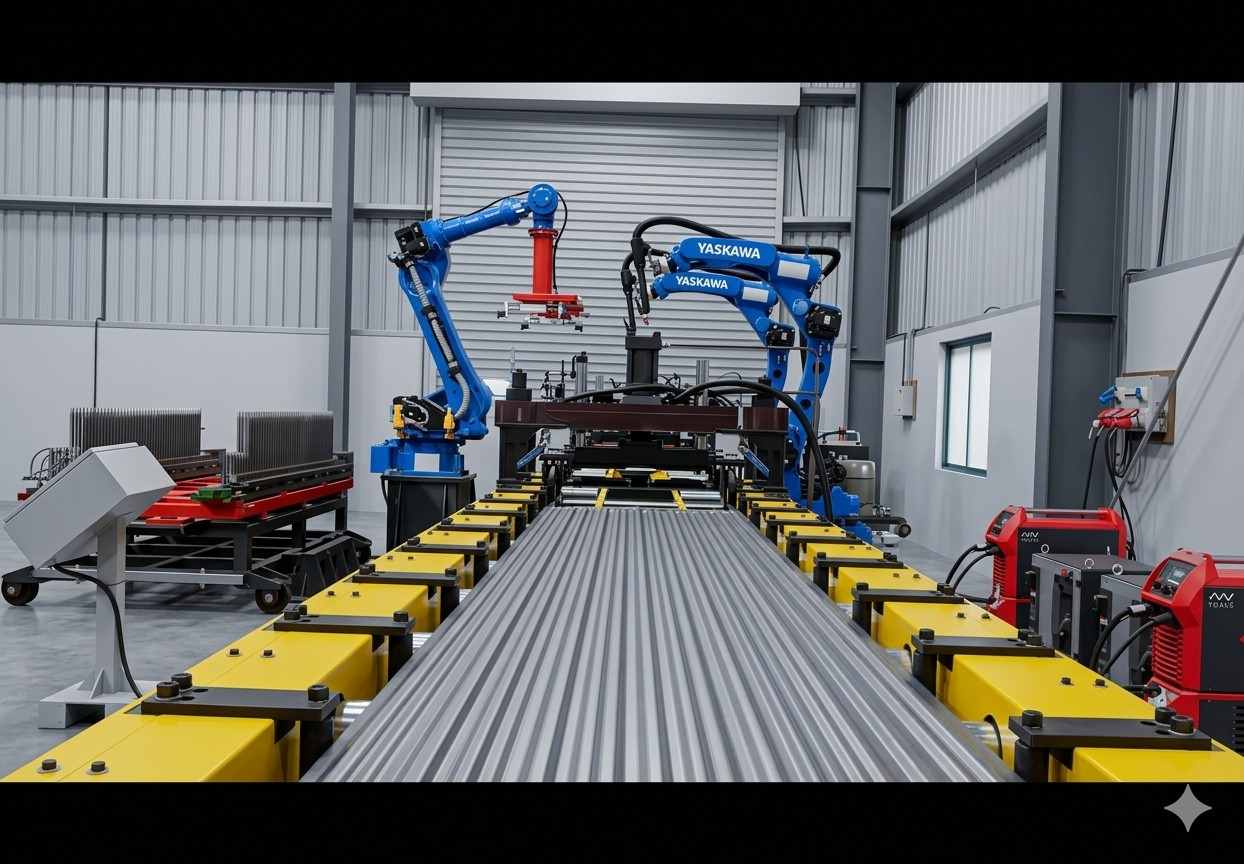
Autobot Systems & Automation is leading Robotic Material Handling Solution in India, We are Manufacturers, Suppliers and Exporters in India. Robotic Material Handling is an industrial automation solution designed to move, pick, place, load, unload, and transfer components between different stages of a manufacturing process. By using industrial robots and application-specific handling equipment, manufacturers can automate repetitive material movement operations.
As production environments become more automated, efficient material handling plays an important role in maintaining smooth production flow. Robotic systems can perform repetitive handling tasks with programmed movements, helping reduce manual intervention and improve process consistency.
Autobot Systems & Automation provides industrial automation solutions in India, including handling automation solutions and robotic automation. The company focuses on precision automatic machines and customized automation solutions for engineering and manufacturing applications.
Discuss Your ApplicationWhat Is Robotic Material Handling?
Robotic Material Handling refers to the use of industrial robots, end-of-arm tooling, sensors, fixtures, and control systems to automatically handle components or materials within a manufacturing environment. Depending on the application, robots can pick components from one location and place them at another workstation, machine, fixture, conveyor, or inspection station.
The system can be integrated with production equipment to coordinate material movement with the overall manufacturing cycle. Robotic material handling is commonly used for repetitive, high-volume, or precision-oriented operations where controlled and consistent movement is required.
Types of Robotic Material Handling
As we are leading Robotic Material Handling Manufacturers in India, our Types are designed to meet different application requirements and industry standards, including the following types:
Robotic Pick and Place
Pick-and-place robots automatically collect components from a predefined location and position them at another location. They are suitable for repetitive loading, unloading, sorting, and transfer operations.
Machine Loading and Unloading
These systems use robots to load raw components into machines and remove finished components after processing. They can help reduce repetitive manual handling around CNC machines, presses, welding stations, and other equipment.
Robotic Transfer Systems
Robotic transfer systems move components between multiple production stations according to a programmed sequence. They are useful for connecting different manufacturing operations and maintaining a continuous production flow.
Palletizing and Depalletizing
Palletizing robots arrange products or components onto pallets, while depalletizing systems remove them for subsequent processing. These solutions are suitable for organized material movement in manufacturing and logistics environments.
Robotic Assembly Handling
Robots can handle and position components during assembly operations. With suitable grippers and control systems, they can accurately transfer components between feeders, fixtures, assembly machines, and inspection stations.
Working Principle of Robotic Material Handling
Component Loading
Components are supplied to the robotic handling area through a fixture, conveyor, pallet, feeder, machine, or other material supply arrangement.
Component Detection
Sensors, programmed positions, or suitable identification systems determine the presence and location of the component.
Robot Positioning
The industrial robot moves to the programmed pickup position according to the predefined handling sequence.
Gripping
The robot uses an appropriate end-of-arm tool or gripper to securely hold the component.
Component Transfer
The robot follows its programmed path and transfers the component to the required machine, fixture, workstation, conveyor, or storage position.
Placement
The component is accurately positioned at the destination according to the application requirements.
Cycle Completion
After releasing the component, the robot returns to its next programmed position and continues the handling cycle.
Technical Specifications of Robotic Material Handling
The specifications of a robotic material handling system depend on the component, production process, payload, reach, cycle time, and required automation level.
| Specification | Details |
|---|---|
| System Type | Robotic Material Handling System |
| Robot Type | Industrial Robot / Application-specific robot |
| Handling Operation | Pick, Place, Transfer, Loading, Unloading |
| Payload | Available as per requirement |
| Robot Reach | Available as per application |
| End-of-Arm Tooling | Customized gripper / handling tool |
| Control System | Robot Controller / PLC-based integration |
| Component Handling | Manual feed / Conveyor / Fixture / Automated feed |
| Automation Level | Semi-automatic / Fully automatic |
| Safety System | Guards, sensors, interlocks and emergency controls as applicable |
| Integration | Machines, conveyors, fixtures and production systems |
| Customization | Available according to application |
Features and Benefits of Robotic Material Handling
As Robotic Material Handling Suppliers in India, our products provide several Features and Benefits including consistent quality, smooth finish, and long service life.
| Features | Benefits |
|---|---|
| Automated Component Handling | Reduces repetitive manual material movement and supports continuous production. |
| Precision Robot Movement | Provides controlled and repeatable component positioning. |
| Customized Grippers | Enables suitable handling of different component shapes and sizes. |
| Machine Integration | Allows robots to work with machines, fixtures, conveyors, and production stations. |
| Programmable Operation | Enables predefined handling sequences for consistent process execution. |
| Reduced Manual Intervention | Helps operators move away from repetitive handling tasks and focus on other activities. |
| Flexible Configuration | Can be designed according to production layout and application requirements. |
| Safety Integration | Supports safer operation through guarding, sensors, interlocks, and emergency controls. |
Applications of Robotic Material Handling
As Robotic Material Handling Exporters in India, our all types are used in various types of industrial sectors such as:
Automotive Manufacturing
Robotic handling systems can transfer automotive components between production stations, machines, fixtures, and inspection areas. They are suitable for repetitive component handling in high-volume manufacturing.
Sheet Metal Components
Robots can load, unload, transfer, and position fabricated sheet-metal components between different production operations. Proper tooling helps handle components according to their shape and size.
Welding Automation
Robotic material handling can supply components to welding stations and remove completed assemblies after the welding cycle. This can help connect component handling with automated welding processes.
CNC Machine Loading
Robots can load raw components into CNC machines and remove processed parts after machining. This reduces repetitive manual loading and unloading operations.
Press and Forging Operations
Robotic systems can handle components around presses and other forming equipment where controlled loading, unloading, and transfer operations are required.
Electrical and Engineering Components
Robotic handling can be used to transfer smaller engineered components between production, assembly, and inspection stations. Specialized end-of-arm tooling can be selected according to component characteristics.
Material Transfer and Production Lines
Robots can move components between multiple workstations, conveyors, fixtures, and machines. This helps create a coordinated material flow within an automated manufacturing line.
Why Choose Autobot Systems & Automation?
Industrial Automation Expertise
Autobot Systems & Automation was founded in 2013 and focuses on industrial automation solutions for engineering industries. The company states that its expertise covers electrical engineering, automation, instrumentation, design, manufacturing, and installation.
Customized Automation Solutions
Robotic material handling systems can be developed according to specific component, production, layout, and process requirements. Autobot emphasizes customized and application-oriented automation solutions.
Engineering and Manufacturing Capabilities
The company states that it provides design, manufacturing, installation, and turnkey solutions for precision automation systems. This supports an integrated approach to industrial automation projects.
Integrated Handling Automation
Handling Automation Solutions are listed among Autobot Systems & Automation's product and service offerings, alongside Arc Welding Automation Solutions and Special Purpose Machines.
Project Experience
Autobot Systems & Automation currently states that it has completed 354+ projects and has 119+ satisfied clients. These figures are presented on the company's website as indicators of its project experience.
Autobot Systems & Automation is leading Robotic Material Handling Solution in Pune India. Robotic Material Handling provides an effective way to automate repetitive component movement, loading, unloading, transfer, and positioning operations in manufacturing environments. By combining industrial robots, customized tooling, control systems, sensors, and production equipment, manufacturers can develop coordinated material-handling processes.
The technology can be applied across automotive, engineering, welding, machining, sheet-metal, and other industrial operations. Autobot Systems & Automation offers handling automation solutions designed around specific industrial requirements. Contact the company to discuss your robotic material handling application and develop a suitable automation solution.
Frequently Asked Questions
01
1. What is Robotic Material Handling?
Robotic Material Handling uses industrial robots and suitable tooling to automatically pick, move, position, load, unload, or transfer components within a manufacturing process. The system is configured according to the specific handling application.
02
2. What components can robots handle?
Robotic handling systems can be designed for different components depending on their weight, dimensions, shape, material, and handling requirements. The appropriate gripper or end-of-arm tooling is selected according to the component.
03
3. Can robotic material handling be integrated with existing machines?
Yes. Robotic handling systems can be designed to interact with suitable CNC machines, welding systems, conveyors, fixtures, presses, inspection stations, and other production equipment.
04
4. What are the main benefits of robotic material handling?
It can reduce repetitive manual handling, improve movement consistency, support production flow, and provide programmable handling operations. The actual benefits depend on the application and system design.
05
5. Can Robotic Material Handling systems be customized?
Yes. Robot selection, payload, reach, gripper design, programming, safety systems, conveyors, fixtures, and machine integration can be configured according to the production requirements and plant layout.