
Robotic Welding Automation Company in India Autobot Systems & Automation Pune, India
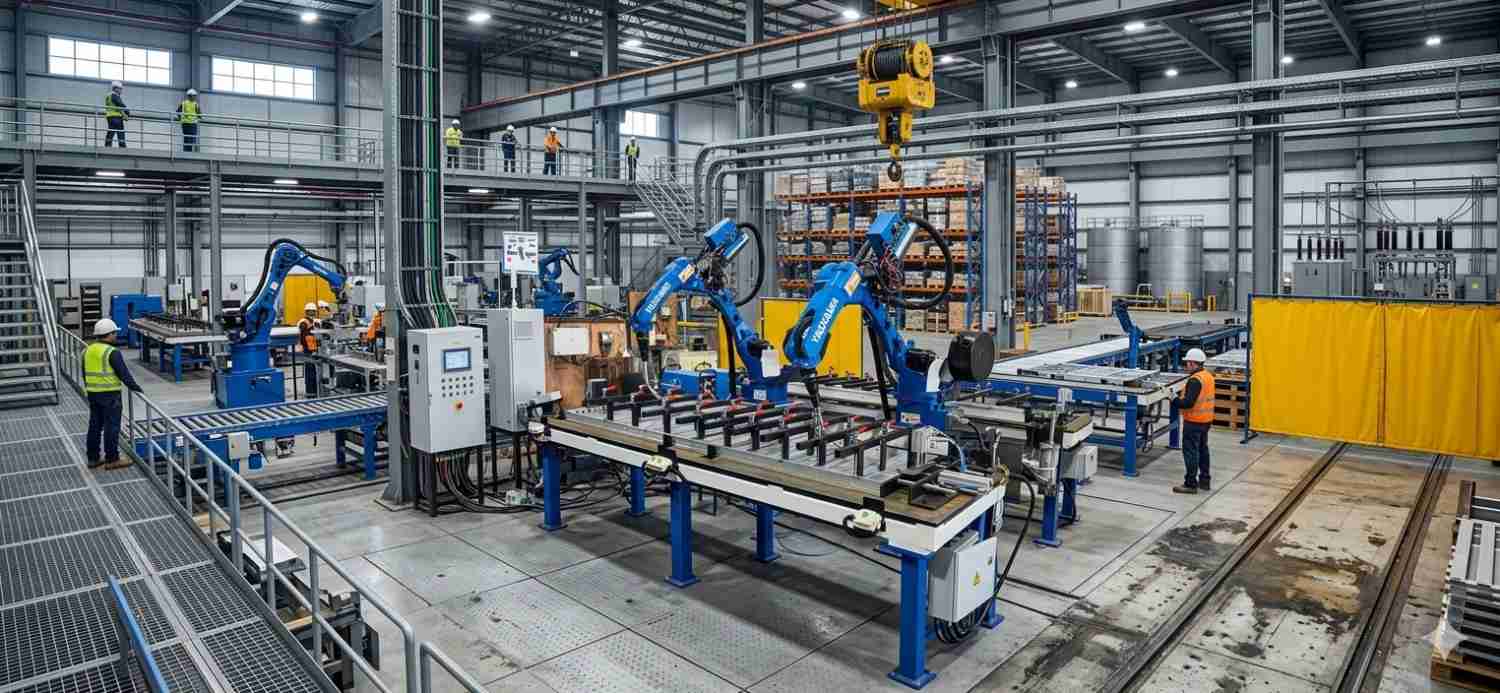
Autobot Systems & Automation is leading Robotic Welding Automation Company in India. Robotic welding automation is transforming modern manufacturing by combining industrial robots, welding equipment, fixtures, sensors, and control systems into an integrated production solution. It enables manufacturers to automate repetitive welding operations while improving consistency, precision, and production efficiency.
As manufacturing requirements become more demanding, industries need welding systems capable of maintaining repeatable weld paths and controlled production cycles. Robotic welding can reduce variations associated with repetitive manual operations and support applications where speed, accuracy, and consistent weld quality are important.
Autobot Systems & Automation is an industrial automation company based in India, Maharashtra, offering robotic welding and welding automation solutions. The company provides automation solutions for engineering industries and has capabilities covering design, manufacturing, installation, and turnkey automation solutions.
Discuss Your ApplicationWhat Is Robotic Welding Automation?
Robotic welding automation is a manufacturing process in which an industrial robot performs programmed welding operations using suitable welding equipment and tooling. The system can include a robotic arm, welding torch, controller, sensors, fixtures, safety systems, and other automation equipment.
Robotic welding is designed to perform predefined weld paths with controlled movement and repeatability. It can support processes such as MIG, TIG, and spot welding depending on the application and system configuration. These solutions are particularly useful in industries where repetitive welding, complex weld locations, production consistency, and controlled cycle times are important.
Types of Robotic Welding Automation
As we are leading Robotic Welding Automation Manufacturers in India, our Types are designed to meet different application requirements and industry standards, including the following types:
Robotic MIG Welding
Robotic MIG welding systems automate MIG welding operations using a robotic arm, welding power source, wire-feeding equipment, and programmed weld paths. They are suitable for repetitive fabrication and component welding applications.
Robotic TIG Welding
Robotic TIG welding uses automated robotic movement to perform controlled TIG welding operations. It can be considered for applications requiring precise torch positioning and controlled weld execution.
Robotic Spot Welding
Robotic spot welding systems use robotic equipment and suitable spot-welding tools to perform predefined welding points. They are commonly suited to repetitive sheet-metal and assembly applications.
Robotic Arc Welding
Robotic arc welding systems automate arc-welding operations through programmed robotic movements. They can help maintain repeatable torch positioning and welding sequences across production cycles.
Robotic Sheet Metal Welding
Robotic sheet metal welding uses automated welding equipment to join fabricated sheet-metal components. Autobot Systems & Automation describes robotic sheet-metal welding as a solution focused on precision, repeatability, and productivity for suitable applications.
Working Principle of Robotic Welding Automation
Component Loading
The component is positioned manually or automatically within the robotic welding cell according to the application requirements.
Fixture Positioning
A dedicated fixture holds and locates the component accurately to maintain the required welding position during the operation.
Programming and Path Setting
The robotic system is programmed with the required weld paths, torch movements, welding speed, angles, and other application-specific parameters.
Welding Cycle Initiation
After the required safety and positioning conditions are satisfied, the robot controller starts the programmed welding sequence.
Automated Welding
The robotic arm moves the welding torch along the programmed path while the welding system performs the required operation.
Monitoring and Control
Sensors and monitoring systems can be integrated to identify deviations and support controlled welding operations. Robotic welding systems may use continuous tracking sensors and vision systems depending on the configuration.
Cycle Completion
After completing the programmed welds, the robot returns to its designated position and the finished component can be unloaded for inspection or the next production stage.
Technical Specifications of Robotic Welding Automation
The technical configuration of a robotic welding system depends on the component, welding process, production requirements, and selected robotic equipment.
| Specification | Typical Configuration | Details |
|---|---|---|
| System Type | Robotic Welding Automation | Application-specific robotic welding cell |
| Welding Process | MIG / TIG / Spot / Arc | Selected according to application |
| Robot Payload | Application-dependent | Website-listed range: approximately 5 kg to 500 kg depending on type |
| Robot Reach | Application-dependent | Website-listed range: approximately 1.5 m to 3 m depending on configuration |
| Welding Velocity | Variable | Website-listed range: approximately 0.1 to 5 m/min |
| Control System | Digital Robot Controller | Programming and motion control |
| Sensors | Tracking / Vision Systems | Used where required for welding control |
| Fixture | Dedicated / Customized | Holds the component during welding |
| Component Handling | Manual / Automated | Based on production requirements |
| Safety System | Guards / Light Curtains / Emergency Stop | Configuration depends on robotic cell design |
| Customization | Application-Specific | Developed according to customer requirements |
Features and Benefits of Robotic Welding Automation
As Robotic Welding Automation Suppliers in India, our products provide several Features and Benefits including consistent quality, smooth finish, and long service life.
| Features | Benefits | Production Impact | Application Value | Key Advantage |
|---|---|---|---|---|
| Automated Precision Welding | Supports accurate weld execution | Improves repeatability | Suitable for repetitive welds | Consistent welding |
| Multi-Axis Movement | Reaches different welding angles and locations | Supports complex weld paths | Useful for difficult-to-access areas | Greater flexibility |
| Programmable Welding Paths | Allows predefined welding sequences | Supports controlled production cycles | Suitable for repeat production | Process consistency |
| Sensor Integration | Can monitor welding conditions | Helps identify process deviations | Supports quality-focused applications | Improved process control |
| Dedicated Fixtures | Holds components securely | Helps maintain dimensional positioning | Suitable for repetitive production | Accurate component alignment |
| Reduced Manual Intervention | Automates repetitive welding activities | Can improve workflow efficiency | Useful for high-volume applications | Lower repetitive workload |
| Safety Integration | Supports controlled robotic-cell operation | Helps separate operators from hazardous welding zones | Suitable for industrial environments | Improved workplace safety |
| Customized Automation | Can be designed around application needs | Supports application-specific production | Suitable for different component types | Flexible system design |
Applications of Robotic Welding Automation
As Robotic Welding Automation Exporters in India, our all types are used in various types of industrial sectors such as:
Automotive Manufacturing
Robotic welding is widely suited to automotive manufacturing for repetitive component and assembly welding. The controlled movement of robotic systems can support consistent welding across production cycles. Autobot's website highlights automotive-related components including automobile radiators, bike silencers, radiator side brackets, and traction motors.
Sheet Metal Fabrication
Robotic welding can automate the joining of sheet-metal components where repeatability and controlled weld paths are important. Proper fixtures and programmed movement help maintain component positioning during production.
Aerospace Components
Aerospace manufacturing requires controlled and precise production processes. Robotic welding can be considered for suitable components and assemblies where repeatable welding movements are required.
Heavy Machinery
Robotic welding can support the production of heavy machinery components and fabricated assemblies. Automation can reduce repetitive manual welding requirements for suitable high-volume or repeatable applications.
Shipbuilding
Shipbuilding involves large welded structures and assemblies. Robotic welding can be applied to suitable repetitive welding operations where automated movement and consistent weld execution are beneficial.
Engineering Components
Engineering industries can use robotic welding for brackets, frames, fabricated components, shafts, and other assemblies requiring repeatable welding operations. The exact robotic configuration depends on component geometry and welding requirements.
Aluminium Components
Robotic aluminium MIG welding can provide controlled torch movement and repeatable welding for suitable aluminium components. Autobot's published information notes applications involving automotive, aerospace, and marine sectors.
Why Choose Autobot Systems & Automation?
Industrial Automation Experience
Autobot Systems & Automation was founded in 2013 and operates in the industrial automation segment in India, with a focus on precision and productive automation solutions for engineering industries.
Customized Robotic Solutions
The company provides customized robotic welding solutions based on application requirements. This allows the robotic system, welding equipment, fixtures, and control arrangement to be selected according to the production process.
Engineering and Turnkey Capabilities
Autobot Systems & Automation states that it provides design, manufacturing, installation, and turnkey solutions. This supports an integrated approach to industrial automation projects.
Welding Automation Expertise
The company's product portfolio includes Robotic Welding, Arc Welding Automation Solutions, Special Purpose Machines, Handling Automation Solutions, Torch Cleaning Stations, and Auto Contact Tip Changers.
After-Sales and Technical Support
Robotic automation requires ongoing maintenance, programming support, and technical service. Autobot provides services including robotic system AMC, robot training, and reintegration services to support existing robotic systems.
Application-Focused Robotic Welding
Robotic welding systems can be configured around component geometry, welding process, production volume, fixture requirements, robot reach, payload, and required automation level.
Robotic Welding Automation Solutions in India
Autobot Systems & Automation is leading Robotic Welding Automation Company in India. Robotic welding automation provides manufacturers with a controlled approach to repetitive welding operations where precision, repeatability, productivity, and process consistency are important.
A properly designed robotic welding cell can combine robotic movement, welding equipment, fixtures, sensors, controls, and safety systems into an integrated solution. Autobot Systems & Automation offers robotic welding and industrial automation solutions from its India operations, with capabilities covering engineering design, manufacturing, installation, and turnkey solutions.
With customized automation and supporting technical services, the company can help manufacturers evaluate and implement robotic welding solutions suited to their production requirements.
Frequently Asked Questions
01
1. What is robotic welding automation?
Robotic welding automation uses an industrial robot to perform programmed welding operations automatically. The system typically combines a robot, welding equipment, controller, fixtures, and suitable safety and sensing systems.
02
2. What welding processes can robotic welding systems perform?
Depending on the selected system and application, robotic welding can support processes such as MIG, TIG, spot, and arc welding. The appropriate process depends on the material, component design, joint configuration, and production requirements.
03
3. What are the main benefits of robotic welding?
Robotic welding can improve repeatability, support consistent weld paths, reduce repetitive manual intervention, and increase production efficiency for suitable applications. It can also provide multi-axis movement for complex welding locations.
04
4. Can robotic welding systems be customized?
Yes. Robotic welding cells can be configured according to component geometry, welding process, fixture requirements, production volume, robot reach, payload, handling method, and required automation level. Autobot Systems & Automation states that its welding robot systems can be tailored to customer requirements.
05
5. Why choose Autobot Systems & Automation for robotic welding?
Autobot Systems & Automation provides robotic welding, arc welding automation, special purpose machines, and related industrial automation solutions. The company also offers design, manufacturing, installation, turnkey solutions, and supporting robotic services.